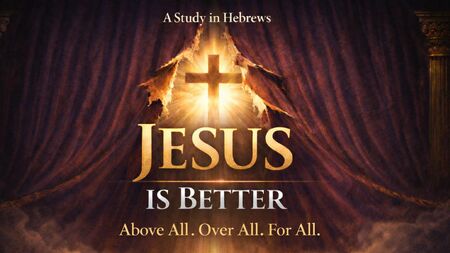
Jesus was not Plan B but always the plan, serving as both king and priest after the order of Melchizedek. Unlike the earthly priests who were temporary and limited by death, Jesus holds a permanent priesthood established by God's sworn oath, making Him the guarantor of a better covenant. Our hope is not abstract or wishful thinking. It has a name, and that name is Jesus. Hebrews 7:25, declares that Jesus is able to save "to the uttermost" all who draw near to God through Him. Pastor Chad shared three dimensions of this phrase: completely (nothing necessary for salvation is missing), continually (his saving work did not end at conversion but goes on as he preserves, sustains, and sanctifies his people), and finally (the work is finished and he will bring us safely into God's presence). Because Jesus lives forever, His intercession for believers never stops, and our salvation is as secure as our Savior's eternal life.
Key Verses: Hebrews 7:20-28; Psalms 110:4
Application & Reflection
Where have you been relying on your own strength, goodness, or effort rather than resting in what Jesus has already completed? Write down Hebrews 7:25 and place it somewhere you will see it daily. Each time you encounter that area of struggle, pause and remind yourself: Jesus is able to save me completely, fully, entirely, and forever, all the way to the end. Then bring that weakness to him in prayer and thank him for his ongoing intercession on your behalf.
- The sermon described salvation not just as a past event but as an ongoing reality, saying 'I am being saved.' How does viewing salvation as a continuing work rather than only a past moment affect how you live day to day?
- Hebrews 7:22 introduces Jesus as the guarantor of a better covenant. What does it mean to you personally that your salvation depends entirely on Jesus' faithfulness and not your own?
- Pastor Chad described three dimensions of 'uttermost': completely, continually, and finally. Which of these three dimensions is most meaningful or most needed in your life right now, and why?
- The sermon made a strong point that Jesus is the only path to God, pushing back against the cultural idea that all religions lead to the same place. How do we navigate that conversation with friends or family who believe differently?
- Hebrews 7:25 says Jesus always lives to make intercession for us. How does the truth that Jesus is actively interceding for you right now change the way you approach your struggles, failures, or moments of doubt?
- Pastor Chad shared the story of his grandfather accepting Christ in a hospital bed, and another person coming to faith in a nursing home shortly before death. What do these stories stir in you about sharing the hope of Christ with others in your own life?
- The sermon closed with the reminder that when the accuser points to your sin, you point the accuser to your Savior. Is there an area of guilt or shame in your life where you need to apply this truth today? How can this group support you in that?
Key Takeaways
- Jesus was always God's plan for salvation. He was not a backup option but the intentional, promised high priest established by God's sworn oath, after the order of Melchizedek, as both king and priest.
- Salvation is not only a past event but an ongoing reality. Jesus saved us from sin's penalty, is saving us from sin's power, and will one day save us from sin's very presence.
- Jesus saves 'to the uttermost,' meaning completely (nothing is left undone), continually (he preserves and sanctifies us throughout our lives), and finally (He will bring us safely into God's eternal presence).
- Because Jesus lives forever, his priesthood and His intercession for believers never end. Our salvation is as secure and permanent as the eternal life of our Savior.
- The promise of salvation belongs specifically to those who draw near to God through Jesus. He is the only mediator, and our hope is not wishful thinking but a certain confidence grounded in who Christ is and what He has done.